Join us
شارك معنا
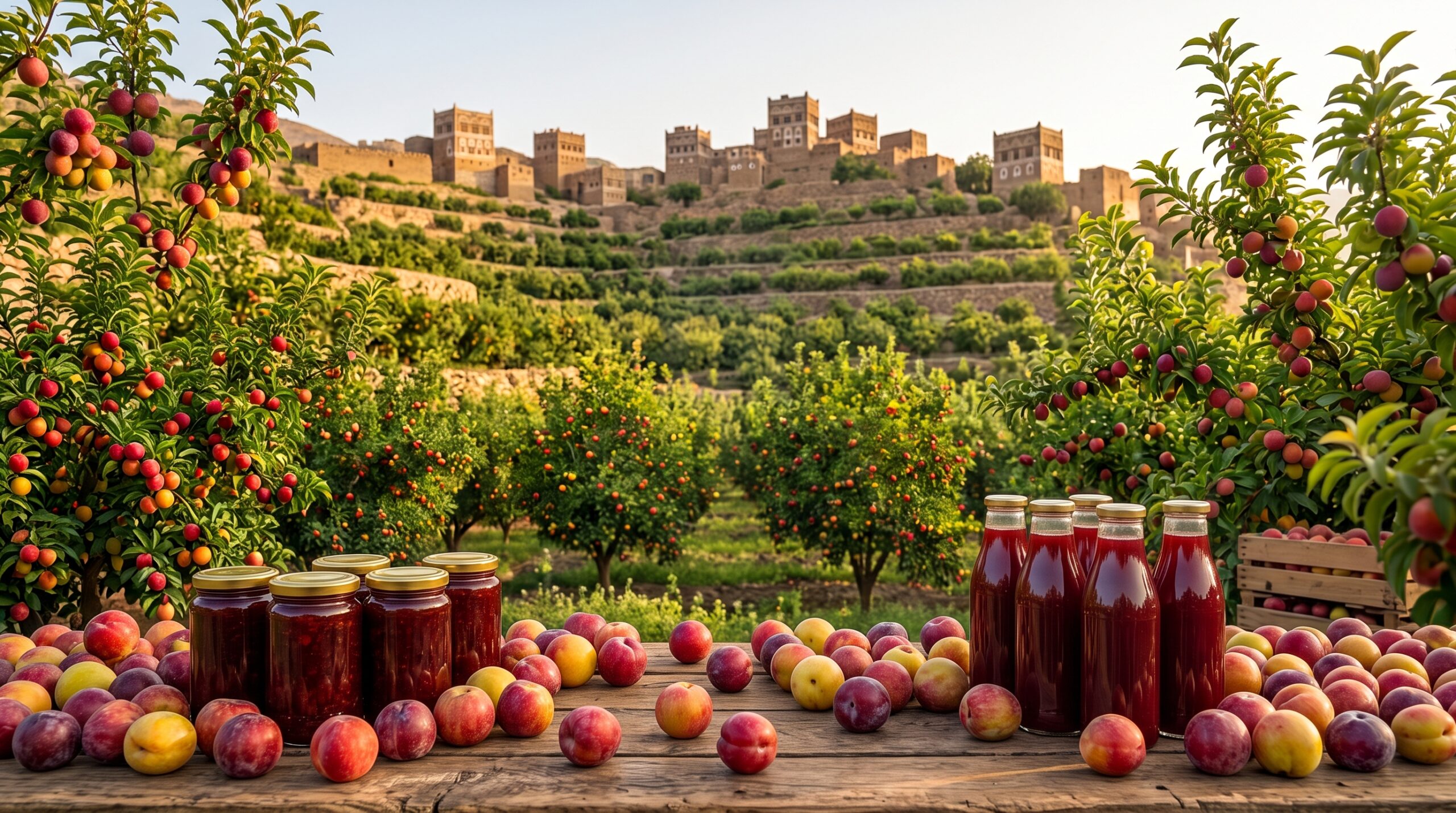
The plum (Prunus spp.) belongs to the Rosaceae family and the stone fruits genus. Geographically and evolutionarily, it is divided into two main branches: the European plum (Prunus domestica), which originated in the Caspian Sea basin, the Caucasus, and Asia Minor; and the Chinese or Japanese plum (Prunus salicina), historically domesticated in the Yangtze River basin in China before being introduced to Japan and spreading globally across continents.
Economically, the plum is recognized as a strategic temperate fruit worldwide. Total annual production exceeds 12.6 million metric tons across an agricultural area of approximately 2.6 million hectares. China leads the list of producing countries with a share exceeding 55% of the global total, followed by Romania, Serbia, Chile, the United States (particularly California), Iran, and Turkey. The annual value of its international trade is estimated at over $2.4 billion for both fresh and dried (prune) products. Chile and the United States lead in prune exports, while the European Union, Gulf states, and East Asian markets are the primary net importers of fresh and processed plum products.
In Yemen, the cultivation of deciduous stone fruits has historically been associated with mountainous highlands characterized by cold winters. Improved and commercial plum varieties—locally known as “Bukhara”—were introduced during the 1970s and 1980s through technical cooperation programs, agricultural development projects, and research stations, such as the Central Highlands Research Station in Qa’a Jahran and the Wadi Al-Sahtour Station in Ibb Governorate.
Yemeni plums possess qualitative comparative advantages that enhance their competitiveness, foremost among them being early maturation. The mountainous climate, characterized by a cold winter and a warm, sunny spring, provides the advantage of early bud dormancy breaking compared to the Mediterranean basin and Europe. Fruits ripen early in the summer (between May and June), offering an exceptional marketing and export window. Additionally, they are distinguished by excellent sensory characteristics and high sugar content. Intense solar radiation and significant diurnal temperature variation raise total soluble solids (TSS) to levels exceeding 16° Brix, granting the fruit a unique balance of sweetness and acidity along with an attractive aromatic flavor. Beyond consumption quality, the crop demonstrates high environmental adaptability and tolerance to water stress when grafted onto wild almond rootstocks, compared to citrus, bananas, and tropical fruits, making it a promising ecological alternative to mitigate groundwater depletion.
Despite these productive and environmental potentials, the plum is still classified as a secondary horticultural crop in Yemen in terms of cultivated area compared to Qat, grapes, apples, and mangoes. Nevertheless, it represents a vital economic lever for diversifying the income of smallholder farmers in the highlands. It secures early and rapid cash flow during May and June, which supports the livelihood stability of rural families and helps finance inputs for subsequent summer crops.
Official statistical data issued by the General Directorate of Agricultural Statistics suffer from a documentation gap regarding rare deciduous fruits and stone fruits; plums are often aggregated under “other fruits” or incidentally included within peach and apricot statistics. Based on available heuristic estimates, the area planted with plum trees in Yemen is estimated at 950 to 1,350 hectares (with a weighted average of approximately 1,150 hectares), distributed among specialized orchards and scattered trees around fields and valley terraces.
This distribution is reflected in the cumulative annual production volume, estimated between 5,500 and 8,200 metric tons (averaging ~6,800 metric tons). There are sharp yield fluctuations from one season to another due to climatic disturbances, particularly “Dhareeb” (early spring frost) waves and seasonal rainfall scarcity during the flowering and fruit-setting periods.
Geographically, plum cultivation is concentrated in the ecological zone of the mountainous highlands at elevations ranging between 1,900 and 2,650 meters above sea level. This topographical range provides the necessary winter Chilling Hours required to break physiological dormancy and stimulate floral growth.
| Region & Governorate | Main Plains and Valleys | Dominant Commercial and Local Varieties | Estimated Production Share |
| Sana’a | Bani Matar, Sanhan, Hamdan, Outer Hayma | Santa Rosa, Methley, Red Baladi Strain | 40% |
| Amran | Qa’a Al-Boun, Raydah, Iyal Surayh, Thula | Hollywood, Yellow Sugar Plum, Santa Rosa | 25% |
| Sa’adah | Sahar, Majz, Saqayn, Sa’adah Basin | Early Japanese varieties, Black & Red Baladi Bukhara | 18% |
| Dhamar | Qa’a Jahran, Ans, Dawran Aness | Beauty, late classic European varieties | 12% |
| Ibb & Al Mahwit | Yarim, Al Saddah, Shibam Kawkaban, Al Tawilah | Mixed local strains adapted to sub-humid climates | 5% |
In terms of local consumption and marketing, main city markets absorb all available quantities of fresh plums within a narrow timeframe not exceeding six to eight weeks. However, the absence of extended cold-chain infrastructure causes severe seasonal glut leading to price collapse, followed by a total supply deficit for the remainder of the year.
This is accompanied by an absolute consumption gap in processed derivatives. The local market relies entirely on imported dried prunes, jam concentrates, specialty sauces, and commercial pastry inputs. Conversely, official exports are almost non-existent, not exceeding fifty tons annually in the form of irregular overland shipments to neighboring markets. This is due to the value chain’s lack of standardized sorting and packing stations, weak conformity certification systems, and the absence of pesticide residue control mechanisms.
The inputs stage in plum cultivation is characterized by technical and structural specificities that distinguish it from other fruits. Tree productivity and fruit quality are closely tied to genetic and nursery determinants that suffer from profound imbalances in the Yemeni agricultural reality. At the forefront of these imbalances is the issue of genetic rootstocks and propagation methods. Most farmers rely on separating random root suckers growing around the trunks of old mother trees—mostly of the traditional “Santa Rosa” variety. This practice leads to the transmission of latent viral diseases and the deterioration of productive efficiency across successive generations. This situation is exacerbated by local nurseries lacking tissue-cultured, disease-resistant vegetative rootstocks, such as Myrobalan 29C and Marianna 2624, which provide trees with immunity against crown rot and are suitable for heavy clay soils. Consequently, farmers are forced to graft onto non-specialized seed rootstocks of apricot and bitter almond, causing Graft Incompatibility in the union area, often resulting in trees breaking under heavy fruit loads.
Alongside nursery dilemmas, there is a severe crisis regarding cross-pollination and the absence of pollinator varieties. Most dominant local varieties (like Santa Rosa and Beauty) belong to the Japanese plum group (Prunus salicina), which is characterized by partial or total self-incompatibility. In the absence of engineered orchard layouts that distribute genetically compatible and temporally synchronized pollinator varieties at recommended technical ratios (one pollinator tree for every eight commercial trees), coupled with the lack of specialized beehives during the February flowering period, flower drop and fruit-set failure rates soar, reducing overall orchard productivity by more than 45%.
Regarding financial and operational feasibility, the total input costs per hectare for a full production season amount to approximately $3,400 (equivalent to 1,802,000 YER) for a model productive orchard with a density of 400 to 500 trees. Irrigation energy and water extraction account for the largest share of this budget at 36.8% ($1,250) to cover diesel fuel or the maintenance of solar pumping systems for deep wells. This is followed by mineral and soluble fertilizers at 22.1% ($750), directed toward balanced compounds, calcium nitrate, and foliar spraying with boron and zinc to improve fruit setting and firmness. Preventive and chemical pest control expenses account for 18.2% ($620), allocated for winter oils, copper compounds, and pesticides targeting fruit flies and stem borers. Finally, the remaining expenses are distributed between winter pruning and field labor at 11.7% ($400), and fermented organic fertilization at 11.2% ($380) to improve soil structure, retain moisture, and nourish the root system prior to dormancy breaking.
The efficiency of the plum farm production stage is hindered by a set of prevalent traditional practices that have negative physiological repercussions on tree health and crop quality. Foremost is the widespread reliance on flood irrigation via open earthen channels where water directly contacts the tree trunks. This exposes the root system to Root Asphyxiation and creates an ideal environment for Phytophthora outbreaks and defensive Gummosis, depleting carbohydrate reserves and leading to gradual branch dieback. This coincides with the neglect of formative and fruiting pruning and the absence of open-center pruning techniques aimed at aerating the tree’s core. This neglect results in the death of internal Fruiting Spurs, confining fruiting to the upper outer branches, alongside diminished coloring efficiency and the loss of the signature crimson gloss of the “Santa Rosa” variety. Furthermore, the reluctance to manually thin fruits (Fruit Thinning) after setting—leaving 7 to 10 centimeters between each fruit—exacerbates the decline in marketing value. The prolific cluster-setting characteristic common in Japanese plums results in massive quantities of commercially undesirable dwarfed fruits (locally called “Da’abil”), induces physiological alternate bearing (biennial bearing), and puts main branches at risk of breaking under excessive weight.
On the phytosanitary front, plum orchards suffer under the pressure of endemic insect pests and fungal diseases with severe economic impact. Larvae of the flatheaded peach and stone fruit borer (Capnodis carbonaria) attack the crown and root areas in the plains of Sana’a, Amran, and Dhamar, causing tree desiccation and total loss, especially under water stress. The Mediterranean fruit fly (Ceratitis capitata) poses the most dangerous threat to the crop; females lay eggs under the fruit skin in early May as coloring begins, leading to internal pulp rot, fruit drop, and crop loss just prior to harvest. Additionally, infestations of the mealy plum aphid (Hyalopterus pruni) on the undersides of leaves during spring secrete heavy honeydew that encourages sooty mold colonization and suppresses photosynthesis. This is coupled with brown rot disease (Monilinia fructigena and M. laxa), which infects early flowers and remains dormant until fruit ripening, causing mummification and rapid rot under high humidity levels.
These practices and disease pressures cast a shadow over production indicators. Actual local productivity ranges between 5.5 and 7.5 metric tons per hectare (a low average of 12 to 16 kilograms per tree), whereas integrated agricultural packages allow for potential yields of 16.0 to 22.0 metric tons per hectare (averaging 35 to 45 kilograms per tree). This gap translates into a waste of production capacity exceeding 62%, fueled by unmanaged spring frosts, poor fertilization, pest outbreaks, and neglected fruit thinning. This disparate production system reflects on the direct marginal cost of producing one farm-level kilogram, ranging from $0.38 to $0.52 (equivalent to 200 to 275 YER in northern governorates). The dimensions and determinants of this are illustrated in the comparative analysis of technical and economic feasibility per hectare between traditional practices and the recommended pattern, as shown in the table below:
| Quantitative & Financial Comparison Indicator | Prevalent Traditional Agricultural Practices | Recommended Modern Agricultural Practices | Discrepancy & Developmental Impact |
| Tree Density & Planting System | 400 trees/ha (random and irregular spacing) | 500 trees/ha (standardized 4 × 5 m spacing with pollinators) | Optimal space utilization with +25% increase |
| Irrigation Method & Water Consumption | Flood irrigation (earthen channels, high waste & evaporation) | Localized drip irrigation with solar pumping | Saves 45% of groundwater and prevents root asphyxiation |
| Pruning & Fruit Thinning Management | Total neglect; dark canopies and crowded dwarfed fruits | Open-center pruning + manual fruit thinning (7-10 cm) | Excellent coloring and increase in fruit diameter from 30 to 55 mm |
| Pest Control & Plant Protection | Random chemical pesticide spraying post-outbreak | Integrated Pest Management (IPM): Pheromone traps and winter oils | Lower pesticide residues, higher percentage of healthy fruits |
| Total Operating & Input Costs/ha | $3,400 | $4,150 (higher investment in fertilization and labor) | Rational investment increase of ~+22% per hectare |
| Average Total Productivity/ha | 6.0 metric tons (6,000 kg) | 18.0 metric tons (18,000 kg) | Yield tripled (+200%) |
| Percentage of Commercially Marketable Fruits | Only 65% (the rest are damaged, infected, or dwarfed) | 92% (firm fruits with uniform size and color) | Reduction in field waste by 27% |
| Net Sellable Production | 3,900 kg/ha | 16,560 kg/ha | Tradable supply volume increased by 4.2 times |
| Production Cost per Kilogram | $0.57 / kg (calculated on total production) | $0.23 / kg | Unit cost reduction by 59.6% |
| Average Farm-gate Sale Price | $0.45 / kg (rushed sale due to poor quality) | $0.80 / kg (premium early fruits sold at a price premium) | Net quality price premium (+77.7%) |
| Total Gross Revenues/ha | $1,755 (in cases of glut and poor quality) | $13,248 | A quantum leap in cash flows per hectare |
| Net Profit Yield for Farmer/ha | Operating loss (-$1,645) to minimal marginal profit | Exceptional net profit: +$9,098 | Transforming the farm from subsistence to a profitable commercial venture |
| Benefit-Cost Ratio (BCR) | 0.51 (inability to cover input costs upon crop damage) | 3.19 (recovering every invested dollar alongside $2.19 in profit) | Superior investment feasibility and economic sustainability |
The comparative table reveals a structural paradox in the economics of Yemeni plum production. Although applying the recommended agricultural package requires increasing investment and operational expenses per hectare by about 22% (from $3,400 to $4,150, due to drip network requirements, purchasing quality fertilizers, and labor costs for thinning and pruning), this increase brings about a radical transformation in resource use efficiency and crop returns. This leap is achieved through two complementary pathways: first, the volume effect, represented by tripling per-hectare productivity (from 6 to 18 tons), which subsequently crashes the marginal cost of producing a single kilogram from $0.57 to merely $0.23 (economies of scale); and second, the quality and sorting effect, which eliminates the phenomenon of “Da’abil” (dwarfed fruits) and raises the share of premium marketable fruits to 92%, enabling the farmer to sell the crop at an average price of $0.80/kg instead of $0.45. Consequently, the farmer transitions from a cycle of loss or fragile marginal profit to achieving a net profit exceeding $9,000 per hectare, with a Benefit-Cost Ratio (BCR) of 3.19. This proves that the core crisis of plum orchards in Yemen is not the high cost of inputs per se, but rather low technical efficiency and the random application of field practices.
The post-harvest handling stage represents the epicenter of the largest economic and qualitative hemorrhage in the plum value chain. The sensitive physiological characteristics of the fruit combine with primitive field handling to accelerate the rate of degradation and spoilage. Physiologically, plums are classified as Climacteric fruits, characterized by high respiration rates and a sharp acceleration in ethylene gas emission immediately upon reaching maturity. Plums are also negatively affected by aggressive manual harvesting practices and friction from workers’ hands, which removes the natural epicuticular wax (Bloom) secreted by the skin as a protective barrier. This loss limits the fruit’s defense against moisture evaporation and fungal attacks, multiplying transpiration rates and causing immediate weight loss exceeding 300%. The defect is worsened by inaccurate estimation of harvest timing, which often oscillates between two erroneous phases: either harvesting too early when fruits are green and sour, failing to reach consumption quality and damaging the product’s market reputation; or delaying harvest until peak ripeness and high moisture fluidity, leaving tissues susceptible to rapid explosion and cracking upon the slightest pressure.
These physiological imbalances are compounded by inadequate sorting, packing, and transportation logistics. There is widespread reliance on nailed wooden crates with sharp edges and recessed protrusions, or deep plastic baskets whose load exceeds 18 kilograms. This exerts crushing vertical pressure on the bottom fruits, causing them to shatter and leak their rich sugar syrup. This is accompanied by a total absence of Pre-cooling operations necessary to eliminate Field Heat. Fruits are loaded immediately after picking under the intense sun with core temperatures ranging from 28 to 33°C. They are then transported via open trucks covered with tightly sealed plastic tarps—producing a humid thermal oven effect—over extended distances of 150 to 400 kilometers toward hot and humid coastal governorate markets in Tihama, Aden, and Mukalla.
This primitive system exacerbates quantitative and qualitative waste and loss rates. Cumulative losses are distributed as 14% due to bruising, cracking, and mechanical pressure in boxes; about 11% as physiological loss from respiration, wilting, and moisture weight loss; and an additional 10% due to fungal rots such as Monilinia and Rhizopus. Thus, total overall losses reach approximately 35% of the annual crop volume. Based on an average production of 6,800 metric tons, this equates to wasting about 2,380 metric tons of fruit annually, causing a direct financial bleed ranging between $1.8 and $2.4 million USD annually lost from farmer revenues and local trade networks.
The food processing and value-addition sector for plums in Yemen suffers from severe structural weakness; the proportion of locally processed quantities does not exceed 1.5% of total production. This is restricted to limited-scale rural and household efforts to prepare non-standardized jams consumed domestically or sold in seasonal exhibitions. This limitation is tied to a technical dilemma related to the dominant genetic composition. Approximately 90% of highland orchards rely on Japanese plum (Prunus salicina) varieties, characterized by soft watery flesh, high juiciness, and a Clingstone pit. When these fruits are sun-dried using traditional methods, these characteristics lead to internal sugar fermentation around the pit, fruit rotting, and an undesirable black discoloration. This is contrary to European plum (Prunus domestica) varieties dedicated to prune production, which feature firm flesh, a freestone pit, and a total soluble solids content exceeding 22° Brix.
To overcome this technical hurdle and adapt processing operations to the local environment, appropriate and low-cost technological solutions have emerged. Foremost among them is the application of the rapid Alkaline Dipping technique, involving the brief immersion of ripe fruits (for 15 to 30 seconds) in a hot, dilute 0.5% solution of sodium hydroxide or sodium carbonate. This creates microscopic cracks in the waxy skin layer, allowing internal water vapor to escape rapidly and preventing sugar fermentation. This procedure is integrated with the operation of hybrid tunnel solar dryers equipped with exhaust fans and supplementary heating systems, ensuring moisture is reduced to approximately 18% in just 48 hours while protecting the crop from dust and insect contamination.
In addition to drying, the physiological properties of plums offer promising processing options for diversifying value-added products. Leading these is the extraction of plum puree and concentrates by pasteurizing the pulp and packaging it aseptically to serve as a national alternative to imported fruit concentrates in juice, jam, and automated bakery industries. Furthermore, sour local strains can be utilized to manufacture specialized spicy sauces (similar to traditional Tkemali sauce) to meet the needs of the restaurant and culinary sectors. Regarding the comprehensive utilization of by-products, cracking the stone pits presents an opportunity to extract Plum Kernel Oil—rich in oleic acid and antioxidants—for use in cosmetic and therapeutic industries, alongside utilizing leftover peels as a source of natural pectin fiber and high-value livestock feed.
Financial indicators and economic analysis confirm the feasibility of these processing pathways in multiplying returns for farmers and the value chain as a whole. The revenue from selling fresh plums during peak glut does not exceed $0.40 per kilogram. However, converting them into dried prunes or concentrated puree raises the net equivalent value of the raw kilogram to between $0.95 and $1.20 after recovering all operating costs, thus transforming seasonal waste into a sustainable income lever.
The marketing and sales stage for the Yemeni plum crop is characterized by an intense dynamic governed by a rapid price collapse curve, known as “The Glut Effect.” This stems from a “choking window” phenomenon, where orchard production floods the markets all at once in a critical and brief timeframe extending from May 20 to the end of June. The season begins with a price spike for early fruits, ranging between $2.5 and $3.5 per kilogram in retail markets in major cities like Sana’a and Aden. However, the arrival of the first week of June and the congestion of supplies from primary production areas—especially Bani Matar, Sanhan, and the Amran basin—in central wholesale markets (such as Dhahban and Shumaila) leads to a sharp deterioration in farm-gate prices, plummeting to between $0.30 and $0.45 per kilogram. Often, this price drops below the marginal cost of picking and transportation, forcing some farmers to refrain from harvesting and leaving the fruit to fall and rot on the trees to avoid deepening operational losses.
This severe price volatility, alongside the urgent need for liquidity and weak capacity to withstand market fluctuations, drives small producers into dependency on the “Dhamanah” system (purchasing the crop on the tree). A local broker (“Dhamman”) inspects the orchard early during the fruit-set stage in April to roughly estimate the yield, paying a lump sum to the farmer. While this arrangement provides urgent cash coverage, it empowers the “Dhamman” to capture the lion’s share of returns based on their logistical relationship network with transport lines and wholesale agents, leaving the farmer to lose between 40% and 60% of the true market value of their production.
These structural imbalances are reflected in the wide disparity of profit margins and risk-bearing across the value chain links. The farmer bears the major environmental and production risks (such as frost, drought, pests, and fruit damage) at a marginal cost of approximately $0.42 per kilogram, with a net profit margin not exceeding 10% to 13% at an average seasonal sale price of $0.55 per kilogram. In contrast, the “Dhamman” achieves a net profit margin ranging from 18% to 24% upon resale at around $0.88 per kilogram after accounting for picking and transport costs ($0.15). Meanwhile, the wholesale agent secures a flat, risk-free commission between 7% and 10%, acting solely as an auction broker without taking ownership of the commodity. The chain concludes with the retailer, who buys from the auction and bears the risks of rapid fruit spoilage and degradation, achieving a net margin between 28% and 35% at a final retail price of $1.65 per kilogram. This unbalanced structure shrinks the farmer’s real share to settle at only 28% to 33% of the total amount paid by the end consumer in cities, revealing a vast marketing gap fueled by broker dominance and high distribution losses.
Table of Key Actors
| Chain Actor | Functional Role in the Chain | Available Development Opportunities | Key Challenges and Bottlenecks |
| Input Suppliers | Importing and distributing seedlings, compound fertilizers, drip irrigation networks, and stone fruit pesticides. | Providing specialized pheromone traps for fruit flies and tissue-certified rootstocks. | Chaos in private nurseries, spread of counterfeit pesticides, and high prices for specialty fertilizers. |
| Farmers & Producers | Orchard management, irrigation, fruit thinning, pruning, and manual harvesting. | Applying Good Agricultural Practices (GAP) and introducing windbreaks to prevent frost. | Fragmentation of agricultural ownership, groundwater scarcity, lack of cross-pollination, and liquidity shortages. |
| Brokers (Dhammanin) | Purchasing the crop on trees, securing and transporting it from mountainous plains. | Organizing contract aggregation channels with farmers and linking them to cold storage units. | Monopolizing field pricing, imposing unfair conditions, and using open shipping methods that damage fruits. |
| Wholesalers | Managing daily sales auctions and receiving plum shipments at central markets. | Establishing cold rooms attached to central markets to absorb peak flows. | Lack of transparency in weighing and sorting; charging high commissions without bearing any risk. |
| Retailers | Purchasing quantities from wholesale markets and displaying them in vegetable shops and stalls. | Using transparent, perforated carton packaging to preserve the fruit’s waxy layer. | Rapid degradation and rotting of fruits on open display tables due to ambient heat. |
| End Consumer | Purchasing and consuming fresh plums for the family table. | Increasing demand for national organic products with distinctive flavor. | Inconsistency and mixing of quality grades in a single box, and high prices outside peak periods. |
Table of Stakeholders and Support Institutions
| Institution or Partner | Current Institutional and Regulatory Role | Current Shortcomings and Flaws | Proposals for Development and Institutional Intervention |
| Ministry of Agriculture, Irrigation & Extension | Drafting horticultural policies, regulating plant quarantine, and providing extension services. | Decline in field budgets and absence of extension workers specialized in stone fruit care. | Launching a national program to protect/develop stone fruits and activating strict oversight on nurseries. |
| Agricultural Research & Extension Authority (AREA) | Breeding varieties, evaluating rootstocks, and determining chilling hours for varieties. | Halting of field research trials at Jahran, Ibb, and Sa’adah stations due to weak funding. | Establishing genetic repositories for dwarfing rootstocks and compatible pollinators, and distributing virus-free scions. |
| Cooperative Union & Agricultural Associations | Representing producers and providing agricultural and marketing services. | Most associations’ activities restricted to relief work with a halt in agricultural marketing. | Empowering associations to manage cooperative aggregation, sorting, and cooling centers near orchards. |
| International Organizations (FAO, UNDP, SMEPS) | Implementing value chain projects and improving rural livelihoods. | Focus on emergency relief support and fragmented projects without building sustainable processing assets. | Funding cooperative solar drying units and solar-powered pre-cooling warehouses. |
| Private Sector & Food Factories | Importing and manufacturing jams, juices, and confectionery products. | Absolute reliance on importing plum paste and prunes from abroad while ignoring local production. | Building contract manufacturing lines with associations to purchase summer surplus and convert it into concentrates. |
To transform the proposed strategic interventions from mere theoretical recommendations into realistic operational pathways in the Yemeni agricultural environment, a matrix has been designed linking each intervention to its targeted stage. This identifies an innovative and sustainable financing model, estimated capital and operational costs, and the timeframe for completion:
| Intervention Stage | Targeted Strategic Intervention | Partners & Implementing Entities | Proposed Financing Model & Sustainability Mechanism | Estimated Cost (USD) | Timeframe |
| Inputs | Establishing a genetic repository and certified mother block nurseries to produce dwarfing/resistant rootstocks (Marianna 2624, Myrobalan 29C), disseminating pollinator scions, and providing pollination beehives. | AREA + Ministry of Agriculture + Private sector nurseries | Blended Finance: 60% foundational grant via int’l organizations (FAO) + 40% joint investment from commercial nursery owners financed via development banks, recovered from selling certified seedlings. | $450,000 | 18 – 24 months (Medium-term) |
| Farm Production | Introducing solar-powered localized drip irrigation networks, deploying early warning sensors/fans and windbreaks to combat frost, and establishing Farmer Field Schools (FFS) for thinning and pruning training. | Cooperative Farmer Associations + Social Fund for Development (SFD) + Agricultural Extension | 50:50 Matching Grants: Development program covers 50% of irrigation and windbreak costs as an in-kind grant, while the farmer pays 50% via microfinance institutions over several installments. | $1,200,000 | 12 – 36 months (Phased ongoing) |
| Post-Harvest | Replacing wooden crates with standardized smooth plastic containers (8 kg), and launching 4 solar-powered pre-cooling stations and cold storage warehouses in main production plains. | Agricultural Associations + SMEPS + Major market merchants | Revolving Fund + Asset Partnership: Revolving fund finances the purchase and leasing of plastic crates to farmers at a refundable nominal fee; cooling units funded by 70% int’l grant and 30% local association contribution, managed via service fees. | $680,000 | 6 – 15 months (Quick win) |
| Processing & Value | Constructing 6 hybrid tunnel solar drying centers to process plums into prunes, and establishing two semi-automated lines to produce concentrated plum paste and puree for food factories. | Rural Women’s Processing Groups + National Food Factories + Chambers of Commerce | 4P Model (Public-Private-Producer Partnership): Industrial investor provides processing/packaging lines and guarantees crop purchase, via soft financing from development banks and partial credit risk guarantees from donor organizations. | $950,000 | 12 – 20 months |
| Marketing & Access | Developing a digital platform for daily wholesale market price indices, launching a Geographical Indication (GI) label for “Yemeni Highland Plums,” and concluding collective agricultural supply contracts to break broker monopolies. | Agricultural Cooperative Union + Ministry of Industry & Trade + UNDP | Joint institutional funding with sustainable digital service fees: Tech grant to develop the platform and GI brand; sustainability achieved by charging a nominal subscription to wholesalers/merchants for price transparency and marketing data. | $220,000 | 6 – 12 months (Short-term) |
| Grand Total | Integrated investment package to develop the plum value chain in the Yemeni highlands. | Multi-party coordinating alliance (Government + Cooperative + International + Private Sector) | Integrated, multi-window financing structure that distributes risks and links capital support to field productivity and value addition. | $3,500,000 | 3 Years (36 months) |
The trade balance for the plum crop in Yemen records a comprehensive structural deficit; the near-absence of officially registered fresh exports is offset by widespread import dependence on processed derivatives and dried prunes. Heuristic estimates indicate the importation of between 1,800 and 2,500 metric tons annually of dried prunes from markets in Chile, the USA, Uzbekistan, and Iran, selling in the local market at prices ranging from $6.5 to $9.5 per kilogram for the end consumer. This runs parallel to importing approximately 750 to 1,000 metric tons annually of commercial concentrates, purees, and jams at an average import cost of $3.2 per kilogram.
In this context, transitioning from the traditional agricultural pattern to the recommended technical package represents a fundamental turning point to redraw the economic features of the value chain. Based on a cultivated area of approximately 1,150 hectares and an average traditional yield not exceeding 6 tons per hectare, total current national production stabilizes at about 6,900 metric tons annually, of which the commercially marketable supply does not exceed 4,485 tons due to high rates of waste, spoilage, and dwarfed fruits reaching 35%. Conversely, mainstreaming improved practices allows raising per-hectare yield to 18 metric tons. This gradually skyrockets overall national production by 200% to reach 20,700 metric tons annually (an absolute increase of 13,800 tons), elevating the net commercial supply of premium fruits—thanks to thinning, fertilization, and preventive pest control operations—to approximately 19,044 metric tons, achieving a marketing boom exceeding 324%.
This production transformation translates into a suite of macroeconomic, social, and environmental impacts. Capitalizing on economies of scale and doubled productivity drives a collapse in the marginal cost of producing one field-level kilogram from $0.57 to $0.23 (a 59.6% reduction), granting farmers price elasticity and highly rewarding profit margins. This allows for injecting cash liquidity into the rural economy by shifting financial flows from a state of deficit or critical break-even into generating net profits exceeding $10.4 million USD annually. This enhances social stability in main production governorates (Sana’a, Amran, Dhamar, and Sa’adah) and creates over 2,200 seasonal and permanent jobs in specialized horticultural operations. Furthermore, the shift to drip irrigation systems achieves vital water savings exceeding 3.8 million cubic meters annually, contributing to extending the operational lifespan of critical groundwater basins.
To support the absorption of this production boom, the external export strategy emerges as a primary lever. Reduced farm-gate costs provide exporters with a competitive advantage, enabling them to deliver fresh plums to Gulf Cooperation Council (GCC) markets at prices ranging between $1.20 and $1.50 per kilogram, outperforming European and American products whose costs in those markets range from $3.0 to $4.5 per kilogram. This is complemented by the early ripening advantage during May and June, opening a marketing window that precedes crops from the Mediterranean basin and Turkey. This allows for the export of 4,000 to 6,000 metric tons of premium fruits, generating annual foreign exchange revenues between $7.0 and $10.5 million. Success in this pathway requires fulfilling mandatory logistical prerequisites, including establishing automated sorting and grading stations equipped with pre-cooling units to preserve the epicuticular wax (Bloom), replacing wooden crates with ventilated 5-kilogram carton boxes lined with moisture-absorbing materials, and strictly applying Integrated Pest Management (IPM) protocols to ensure shipments are free of fruit flies and comply with Maximum Residue Limits (MRLs).
Parallel to exports, the stability loop is completed by directing surplus production—amounting to roughly 7,000 to 8,000 metric tons—toward rural food processing centers for Glut Absorption, preventing farm-gate price collapse. Converting 7,000 tons of fresh surplus in tunnel solar dryers yields between 2,000 and 2,150 tons of dried prunes. This achieves full self-sufficiency for the Yemeni market and saves an import bill ranging between $14.0 and $18.0 million annually in drained foreign currency. Furthermore, channeling 1,500 tons of sound fruit into concentrated puree production lines meets the demands of jam, juice, and bakery factories as a national alternative to imported concentrates. This establishes a price safety valve that guarantees the stabilization of local retail prices at $0.80 to $1.20 per kilogram and maintains a farm-gate price of no less than $0.45 to $0.55 per kilogram, thereby enhancing the profitability and sustainability of all actors across the value chain.