Join us
شارك معنا
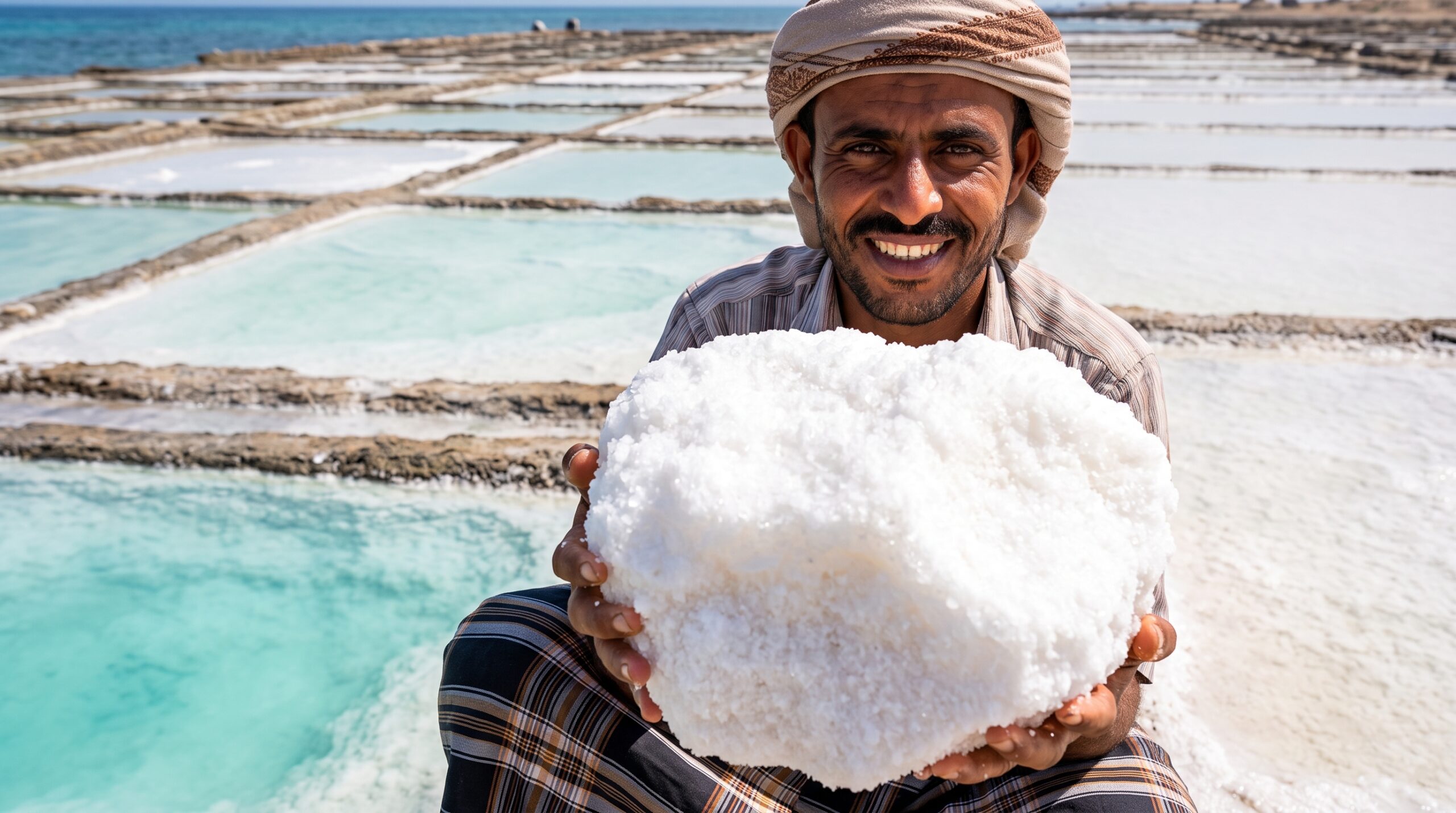
Sodium chloride (NaCl), in its various geological forms such as rock salt (halite) or solar sea salt, is one of the oldest exploited mineral resources in human history and the most strategic non-metallic raw material for modern manufacturing. Annual global production exceeds the 290 to 310 million metric ton threshold, with an international market value surpassing $14 billion for raw and refined products, reaching hundreds of billions when accounting for the outputs of industries completely reliant on it. Historically, sea salt production has been associated with the solar evaporation of sea and ocean waters in shallow ponds, a technique representing a unique engineering model that relies entirely on renewable energy sources like the sun and wind. On a consumption level, direct human dietary intake accounts for roughly 15% to 18% of the global total. In contrast, chemical industries—chiefly the Chlor-Alkali process for producing chlorine gas (Cl2) and caustic soda (NaOH), as well as soda ash (sodium carbonate) manufacturing—consume over 60% of international demand. Additional applications include water treatment, de-icing, leather tanning, petrochemicals, and pharmaceuticals.
Yemen possesses a strategic coastline extending for over 2,500 kilometers along the Red Sea, the Gulf of Aden, and the Arabian Sea, granting the sea salt sector mining and climatic competitive advantages that are rare both regionally and globally. These advantages are primarily evident in the hydrological characteristics and high salinity rates; the salinity of the Red Sea ranges between 40 and 41 parts per thousand (40 – 41 PSU), and the Gulf of Aden between 36 and 37 PSU, surpassing the global average for open ocean waters (35 PSU). This significantly reduces the evaporation time and cycles required to reach halite saturation. These assets are bolstered by climatic advantages and high solar evaporation rates. The coastal plains of Tihama and the shores of Aden, Abyan, and Shabwah are characterized by perpendicular solar radiation exceeding 5.5 to 6.5 kWh/m²/day and annual evaporation rates ranging between 2,200 and 3,000 mm/year. Coupled with regular wind activity and an almost complete absence of rainfall for most months of the year, this provides free thermal energy that eliminates the need for fuel consumption in the condensation and crystallization processes. Furthermore, the favorable coastal topography, characterized by the widespread presence of Coastal Sabkhas (salt flats) and low-lying lands with impermeable clay soils, reduces the engineering costs of pond lining and facilitates the construction of large-scale solar salt works directly adjacent to seawater.
The exploitation of sea salt in Yemen dates back thousands of years through traditional extraction methods in natural Sabkhas. The sector witnessed a significant industrial leap with the establishment of modern salt works in Aden in the late 19th century (such as the Italian Salt Company in 1886 and the Khadem Aden salt works). By the mid-20th century, Aden had transformed into a major global export hub for solar salt, supplying India, East Africa, and East Asia with a peak capacity exceeding 200,000 tons annually. Today, this mining activity serves as a livelihood pillar and a vital source of seasonal income for thousands of families in coastal communities across the Al Hudaydah, Aden, Lahij, and Abyan governorates. Moreover, it stands as a promising strategic raw material to support economic diversification programs, import substitution, and the establishment of a local, non-oil chemical industry capable of absorbing thousands of workers.
Geologically, sea salt is theoretically an inexhaustible resource due to the continuous supply of open seawater to the basins. Its production capacity is constrained only by topographically suitable coastal areas and prevailing evaporation rates. Despite this abundance, indicative estimates suggest that Yemen’s actual annual production ranges between 180,000 and 260,000 metric tons. This level is far below historical potential, primarily due to the partial breakdown of Aden’s salt works infrastructure and the dominance of traditional methods on the West Coast. Geographically, this capacity is distributed between the Aden Governorate—home to the major central salt works managed by the Public Salt Corporation in Al Mansura, Khormaksar, and Sheikh Othman, which produces salt with a chemical purity ranging from 97.5% to 99.1% sodium chloride post-washing—and the Al Hudaydah Governorate on the West Coast (Al Luḩayyah, As Salif, Al Munirah, Al Khawkhah, Ad Durayhimi). The latter produces between 100,000 and 140,000 tons annually through artisanal activities and cooperatives that lack industrial washing and suffer from pond contamination by wind-blown dust, reducing raw purity to between 94.0% and 97.0%. The map is completed by scattered traditional salt works along the coasts of Abyan, Lahij, Shabwah, and Hadhramaut (e.g., Khor Omeira, Qana, Bir Ali, and Shihr), producing between 15,000 and 25,000 tons annually of coarse varieties destined for local consumption, leather tanning, and fish salting.
Conversely, the consumption equation reveals a significant structural gap. The average per capita consumption of dietary salt is approximately 10 kg annually (including home processing), which raises direct national demand for Yemen’s population of roughly 34 million to about 340,000 tons annually. To this, industrial consumption of 40,000 to 60,000 tons annually is added, serving the fish salting, tanning, food and dairy, industrial water treatment, and detergent/soap manufacturing sectors. This disparity is reflected in self-sufficiency indicators: while the country achieves approximate self-sufficiency in raw and bulk dietary salt, it registers a critical deficit of nearly 90% in ultra-pure and specialized industrial salt. This forces major industrial facilities and urban consumers to rely on imported refined Vacuum Salt.
This production imbalance has negatively impacted foreign trade. Yemeni sea salt exports have almost entirely collapsed from their historical peak of over 150,000 tons annually to sporadic, irregular shipments not exceeding 5,000 to 10,000 tons annually, transported via wooden dhows and small vessels to Horn of Africa markets (Djibouti, Ethiopia, and Somalia). In parallel, the Yemeni market has pivoted to imports to cover the qualitative deficit, importing between 35,000 and 50,000 tons annually of refined vacuum salt, water treatment salts, and dishwasher tablets from neighboring and European countries. This imposes a continuous drain on foreign exchange reserves, estimated at $8 to $12 million annually.
The Yemeni sea salt sector is characterized by divergent legal and operational complexities between the organized and artisanal sectors. In Aden, the major central salt works operate under the legal tenure of the Public Salt Corporation. However, it faces chronic real estate encroachments and severe jurisdictional disputes between the General Authority for Lands, Survey and Urban Planning, and the Free Zone Authority. This has resulted in vast areas of outer evaporation ponds being lost to landfilling and unregulated construction, shrinking the hydraulic capacity of these historical works. Conversely, customary tenure systems dominate the artisanal and small-scale mining (ASM) sector in the West Coast and Al Hudaydah (Al Luḩayyah, Buhais, Al Munirah, and Ad Durayhimi). Although salt flat lands are legally classified as state property managed by the “Geological Survey” and “Lands” authorities, their actual management is subject to local tribal sheikhdoms and community leaders who impose in-kind royalties ranging from 5% to 10% of production, along with toll collections at village entrances. This occurs in the complete absence of formal mining concession contracts that guarantee long-term exploitation rights.
Regarding hydraulic lifting mechanics, a close and costly linkage exists between salt production and energy networks. Extracting one ton of solar salt requires pumping and evaporating 35 to 45 cubic meters of seawater with a salinity of 38 to 41 PSU. Given the absence of gravity-fed tidal intake in most Tihama salt works—which feature shallow sandy beaches—operations rely entirely on dilapidated centrifugal pumps (6 to 10 inches in diameter) driven by slow-revving agricultural diesel engines (such as modified older Lister Petter, Komatsu, and Deutz engines). These consume 12 to 18 liters per 100 cubic meters lifted at a low head (H = 2 – 4 meters). With local diesel prices surging to volatile record levels between $0.85 and $1.15 per liter, energy alone accounts for 48% to 58% of the cash operational expenditures at the pond level. Meanwhile, transitioning to Solar PV pumping presents strong technical feasibility, leveraging high solar irradiance (over 2,100 kWh/m²/year) via high-flow, low-head systems with capacities between 15 and 45 kW. This would completely eliminate fuel dependencies, slash the cost per ton by over 40%, and offer an investment payback period of merely 14 to 20 months.
Technical challenges compound at the level of inputs, quality standards, and packaging. Operations suffer from a near-total absence of standard Baumé hydrometers (0 – 70 °Bé), with over 85% of salt workers in Al Hudaydah and Abyan relying on primitive sensory methods—such as observing surface crusts, tasting, or the egg-float test. This causes severe timing miscalculations when transferring concentrated brines and precipitating impurities. Processing operations also suffer as small-scale millers refrain from adding legally mandated potassium iodate (KIO3) to avoid its high cost ($45 – $60/kg) following import monopolies and the cessation of relief aid. Additionally, there is a total lack of approved anti-caking agents, such as sodium or potassium ferrocyanide (YPS / E536), leading to rapid hardening and clumping of the salt due to coastal humidity. The chain is completed using locally made 50 kg woven polypropylene (PP) bags costing $0.26 to $0.34 per bag; however, removing the inner polyethylene (PE) insulating liner to cut costs causes brine leakage and exposes the salt to moisture and physical contamination during handling. Consequently, the total cost of primary inputs ranges between $4.80 and $6.80 per raw ton, with fuel accounting for about 54%.
Extraction and primary production of sea salt in Yemen vary between two distinct operational models. In Aden, the “Public Salt Corporation” adopts a semi-industrial model based on a legacy engineering system, systematically divided into primary reservoirs, condensers, and crystallizers for halite, partially fed by hydraulic gates leveraging the ocean tide. However, the salt works face severe operational challenges due to the breakdown of the internal narrow-gauge railway (Decauville rail system) and the dilapidation of Russian and British mechanical scrapers operating since the 1970s. This has forced management to use civilian wheel loaders, which scour and destroy the ponds’ impermeable clay base, elevating raw salt turbidity. Conversely, a spontaneous artisanal model prevails on the West Coast in Tihama (Al Luḩayyah, Ad Durayhimi, Al Khawkhah, and Al Munirah). This relies on haphazard ponds separated by fragile earthen berms (30 – 50 cm high) filled in intermittent batches without regular desilting. Their crisis is worsened by the summer “Ghabar” winds of Tihama, which dump tons of silt and fine dust into the brines during crystallization, dyeing the salt a dark gray and raising the insoluble impurities ratio beyond 2.0%, far exceeding the allowable standard limit (0.5%).
This operational disparity is coupled with a critical technical flaw in managing the physical chemistry of fractional crystallization. The standard chemical pathway dictates first concentrating seawater between 3.5 and 12.0 °Bé to precipitate calcium carbonate (CaCO3) and iron oxides, then isolating it between 12.0 and 25.5 °Bé to precipitate hydrated calcium sulfate (Gypsum CaSO4 · 2H2O) before transferring the brine to crystallizers. The final stage strictly precipitates pure sodium chloride (NaCl) within the critical range of 25.5 and 29.5 °Bé at a purity exceeding 98.5%. However, due to the lack of hydrometers and the pressure to increase harvested weight, artisanal producers commit a fatal error: they allow the brine to evaporate beyond 30.0 °Bé, reaching 32.0 and 34.0 °Bé. This over-concentration forces the precipitation of bitter double salts over the halite crystals—chiefly magnesium sulfate (MgSO4), hydrated magnesium chloride (MgCl2 · 6H2O – Bischofite), and potassium chloride (KCl). This yields salt with a pungent, bitter taste that is highly hygroscopic and fast-hardening, while its sodium chloride purity plummets below 92.5%.
Mining losses deepen during the harvest phase, which is conducted manually in most West Coast and Abyan salt works using sharp iron pickaxes and shovels. Uncontrolled, aggressive digging scrapes 1 to 2 cm of the clay bottom, mixing it with the salt. This contaminates the crop with organic and bacterial clay matter, complicating subsequent washing processes and raising costs. This environmental and mechanical degradation directly impacts the phase’s productive and economic indicators. While organized works in Aden record a productivity of 80 to 110 tons per hectare annually, artisanal works in Al Hudaydah and Abyan plummet to 35 to 55 tons per hectare annually due to downward brine seepage and poor hydraulic isolation. Meanwhile, the extraction cost of a raw ton at the pond’s edge stabilizes between $8.50 and $12.50.
Primary treatments for sea salt in most Yemeni salt works are limited to primitive practices, involving the manual aggregation of harvested salt into exposed pyramidal windrows on pond embankments for several weeks. This allows gravity to naturally drain the entrapped mother liquors and reduce free moisture from 10% – 12% down to roughly 4% – 6%. The West and South coast salt works completely lack counter-current hydraulic washing units utilizing supersaturated brine (25 °Bé). Instead, artisanal producers employ a faulty treatment by spraying the piles with low-density surface seawater or salty well water. This dissolves the fine sodium chloride crystals, causing a weight loss of up to 15%, without removing the clay impurities trapped inside the larger crystals.
Logistically, transporting salt from coastal sea level (zero elevation) to major consumption centers in the mountainous highlands (Sana’a at 2,250 meters, Dhamar at 2,400 meters, Ibb at 2,050 meters, and Taiz at 1,400 meters) constitutes the most prominent operational challenge in the value chain. This difficulty is exacerbated across mountainous arterial routes; the Tihama – Sana’a route (Al Hudaydah – Bajil – Manakhah – Naqil Asar) features sharp bends and steep inclines that increase heavy trucks’ fuel consumption by 40% to 50% compared to flat coastal roads. Furthermore, the damage to direct roads between the coast and Aden towards Taiz and Ibb has forced trucks to navigate highly rugged and dangerous mountain passes (like Hayjat al-Abd, Al-Qabitah, and As-Silw), causing trip times to jump from 4 hours to between 24 and 48 hours. Concurrently, salt is transported with high moisture content inside uninsulated woven bags. Highly corrosive and saline brines leak through truck beds, causing rapid chemical destruction to vehicle chassis, axles, steel suspension springs, and air brake tanks. Consequently, transporters impose a “corrosion hazard premium,” raising salt transport tariffs by 20% to 35% above the rates for grain and dry goods over the same distances.
These burdens are magnified as trucks are subjected to between 8 and 15 local toll/collection checkpoints, axle weigh-scale fees, and municipal improvement taxes, alongside customs procedures resulting from internal financial divisions. This adds a hidden cost ranging from $12 to $18 per ton. These obstacles culminate in physical and qualitative losses that drain between 14% and 19% of the salt’s weight, divided among: the dissolution of exposed piles due to coastal rains and seepage (6% – 8%), mechanical tearing of poor-quality PP bags during repeated manual loading and unloading (3% – 4%), and the dispersion of salt dust and leakage of liquid brines along the transit route (5% – 7%). Upon reaching wholesale markets and mills, shipments are subjected to unfair qualitative deductions ranging from 20% to 35% (averaging 25%) under the pretext of “Tare Weight Deduction” (moisture differential) and high clay/turbidity impurities. The total internal road transport cost stabilizes between $24 and $36 per ton, amid total weight losses that consume 15% to 18% of the entire production across the transport and storage route.
The structure of local salt processing and manufacturing is characterized by the absolute dominance of random artisanal mills, which control over 80% of the processed market in city suburbs and governorate centers. These workshops rely on primitive hammer mills fabricated locally from scrap iron and lacking corrosion-resistant steel lining (Stainless Steel 316L). This results in continuous mechanical wear by the wet salt, contaminating it with iron filings and heavy metals, and increasing turbidity. This crisis is compounded by the lack of fluidized bed dryers and haphazard iodization processes; potassium iodate solution is sprayed using manual agricultural knapsack sprayers over salt piles while they are turned with shovels on cracked cement floors. This creates a severe regulatory failure, evidenced by iodine concentrations within a single bag fluctuating wildly between 5 and 180 parts per million (ppm), directly violating the national standard (70 – 100 ppm) and undermining efforts to combat iodine deficiency disorders. In contrast, modern facilities with semi-automated refining lines are limited to a handful of factories in Sana’a, Al Hudaydah, and Aden. They utilize saturated brine washing, centrifuges, and rotary drying, yet their operational capacity has plummeted below 40% of their design capacity (ranging between 30% and 42%) due to the total outage of the public electricity grid and costly reliance on private diesel generators, bearing exorbitant generation costs of $0.35 to $0.45 per kWh.
This qualitative degradation has created a severe gap, halting the use of local salt in transformative and intermediate industrial applications due to the presence of calcium and magnesium impurities. Major food, dairy, yeast, and confectionery factories reject its use because it causes premature coagulation of milk proteins, beverage turbidity, and acidity imbalances in preserved foods. Instead, they import their entire requirements of ultra-pure vacuum salt (>99.8% NaCl) from Saudi Arabia, Jordan, and Egypt at costs exceeding $200 per delivered ton. This negative impact extends to the leather tanning and fish preservation sectors, both large consumers. Using artisanal salt saturated with crystallized magnesium chloride causes leather fibers to “harden” and creates grease spots that block the penetration of tanning solutions and chromium, degrading the export value of Yemeni leather in international markets by over 30%. Similarly, chlorine and detergent plants, as well as water treatment facilities, suffer from the absence of pure, sulfate-free salt; these impurities destroy expensive electrolysis membrane cells and cause scaling in ion-exchange resins, forcing factories to import fully compressed salt tablets.
Losses do not stop at crystallized salt but extend to massive industrial waste of “Bittern” (known locally as “Al-Mader”), a hyper-dense aqueous solution (>30 °Bé). Hundreds of thousands of cubic meters are discharged annually into the sea, despite each cubic meter containing 180 to 220 kg of magnesium chloride (MgCl2), 60 to 80 kg of magnesium sulfate (MgSO4), and 25 to 35 kg of potassium chloride (KCl), in addition to 2.0 to 3.5 kg of the rare element bromine (Br2). With the total absence of any local chemical extraction industry, the opportunity to produce magnesium hydroxide and refractory magnesia (MgO)—essential for cement plant refractories and wastewater treatment—via simple basic precipitation with slaked lime or caustic soda is entirely lost. This reality encapsulates the sector’s ultimate paradox: less than 15% of total production undergoes standard industrial processing, squandering the opportunity to realize genuine value addition ranging from +90% to +140%, which could be captured simply by converting raw salt into a refined, machine-packaged product according to industrial standards.
The structure of the sea salt market in Yemen is subject to severe structural imbalances in negotiating power, holding the artisanal salt worker at the bottom of the chain in a tight grip. The worker groans under strict financial dependence on networks of middlemen, field contractors, and local transport merchants. Amidst a severe liquidity shortage and the total absence of accessible bank financing, the worker is forced to rely on cash and in-kind advances provided by middlemen to cover fuel, empty bags, and subsistence needs during the evaporation and preparation seasons. This comes with an extortionate condition binding the worker to sell their entire harvest to the same middleman at dictated prices, which often fall 30% to 40% below fair market value. This dominance culminates in urban centers through an oligopsony model. Specific families and commercial networks in central wholesale markets (such as Dhahban, Al-Raneena, and Shumaila in Sana’a, and warehouses in Bajil, Al Hudaydah, and Aden) control the receipt of shipments. They leverage their massive storage capacities to manipulate market supply and suppress prices in their favor, stripping producers and small transporters of any fair profit margin.
Commodity flows are distributed across three main marketing channels that reveal a vast disparity in value addition. The first is the bulk and coarse salt channel, transported directly in tipper trucks to coastal fish salting plants, tanneries, and livestock markets (as licking blocks); a channel characterized by thin margins and high loss risks. This is followed by the popular artisanal retail channel, where salt is milled locally, packed in poor-quality transparent 1kg nylon bags, and sealed manually with small heat sealers. These lack labels detailing origin, production date, or iodization guarantees, and are distributed in local grocery stores and rural markets at meager prices ranging from $0.08 to $0.12 per bag. In stark contrast stands the premium packaged products channel in major urban malls and supermarkets, which is entirely dominated by imported products (such as Sasa salt, Himalayan salt substitutes, and French/Italian organic sea salt) sold at exorbitant retail prices ranging from $0.80 to $2.50 per kilogram. This disparity epitomizes profound economic distortion, corroborated by quantitative phase indicators: the commercial price of salt multiplies by 6 to 9 times from the base of the salt works to the retail shelf, whereas the primary extractor earns merely 9 to 13 cents of every dollar paid by the final consumer.
Solar salt extraction operations in Yemen involve a highly harsh working environment posing severe risks to occupational health and safety. Salt workers face a looming threat to their vision, risking gradual blindness or contracting Pterygium and Cataracts due to prolonged exposure to intense UV radiation reflecting off the exposed white salt flats. This coincides with heat stress and severe dehydration resulting from grueling physical labor in temperatures exceeding 40°C and stifling humidity, elevating the risk of heatstroke and kidney function deterioration. Furthermore, skin diseases and chronic, slow-healing ulcers on extremities are rampant due to wading barefoot or semi-barefoot in highly hypertonic brines. The severity of these health impacts multiplies given the near-total absence of personal protective equipment (PPE)—such as UV-filtering safety glasses, insulated rubber boots, and leather gloves—alongside a lack of health insurance coverage or primary preventive care programs.
On labor and societal fronts, the salt extraction sector is classified as a highly vulnerable, unorganized, labor-intensive mining activity. Notable instances of child and adolescent labor are observed in packing and strenuous manual harvesting, undertaken to supplement eroding family incomes. These workers lack any social protection umbrella or legal employment contracts guaranteeing their basic rights and fair wage standards. The majority operate under a “daily wage” or “piece-rate by weight” system at meager income levels failing to cover minimum basic living costs, thereby entrenching the economic fragility of producing coastal communities.
Environmentally, unregulated artisanal activity generates severe ecological damage threatening marine and coastal resource sustainability. The indiscriminate discharge of Bittern—with its extreme temperature and hyper-salinity—into shallow coastal bays decimates fish larvae, crustacean colonies, and vital mangrove ecosystems. Additionally, the mismanagement of intake and water feed channels creates biological stagnation zones that emit foul-smelling hydrogen sulfide (H2S) gas, posing respiratory risks. Wind-blown caustic salt dust also salinizes soil and ruins adjacent agricultural lands, particularly in the Tihama plain. These issues are crowned by administrative complexities and fierce tenure disputes stemming from overlapping institutional mandates and legal jurisdictions among the Public Salt Corporation, the Geological Survey Board, the Lands Authority, and port authorities in strategic zones. These conflicts have had a devastating impact on Aden’s historic salt works, where urban sprawl and unregulated real estate landfilling have swallowed vast areas of its outer evaporation ponds. This threatens to permanently decommission the nation’s largest mining asset for salt production and definitively dismantle its integrated production chain.
| Key Player (Direct Actor) | Operational and Economic Significance | Current Shortcomings and Weaknesses | Development and Upgrading Proposals |
| Extractors and Artisanal Workers (Artisanal Miners) | The foundational production base; perform field pumping, crystallization care, strenuous manual harvesting, and initial piling in Tihama and southern governorates salt works. | Lack of crystallization chemistry knowledge (relying on visual guesswork), absence of PPE, and falling into debt traps and dependency on middlemen. | Organize workers into productive cooperatives, train them on Baumé hydrometers, and provide OHS equipment and a cooperative health insurance umbrella. |
| Salt Works Owners and Local Investors | Manage and lease evaporation ponds, finance the purchase of diesel pumps, and reclaim earthen berms on the West Coast and Abyan. | Weak long-term investment vision, reliance on makeshift solutions for water pumping and pond maintenance, and evasion of environmental standards. | Pivot toward investment in solar pumping stations, line pond bottoms with polymeric materials (HDPE), and forge direct contractual partnerships with major factories. |
| Public Salt Corporation (Public Sector – Aden) | Manages the largest historic sea salt mining industrial complex in Yemen, preserving a strategic asset for export and national food security. | Dilapidation of mechanical machinery and rail networks, financial and operational deficits, and chronic land disputes with the Lands Authority and landfilling encroachers. | Restructure the Corporation via a Public-Private Partnership (PPP) model, upgrade harvesting scrapers, and modernize the central automated washing line. |
| Salt Works Brokers and Field Middlemen | Aggregate the harvest, provide urgent cash liquidity, secure fuel and bags for artisans during production seasons, and guarantee raw material off-take. | Exploiting artisans’ liquidity shortages by imposing unfair purchase prices 30% – 40% below fair value, and monopolizing raw production marketing. | Frame brokerage activities via cooperative marketing platforms, and link financing to microfinance banks to break monopolies and unfair financial dependency. |
| Logistics Transport Contractors and Fleets | The logistical artery moving hundreds of thousands of tons of salt from coastal sea level to densely populated mountainous highland markets. | Use of open trucks causing raw material contamination and chassis corrosion via brine leakage; imposing exorbitant tariffs due to rugged roads and tolls. | Utilize trailers and containers lined with anti-corrosion materials (Epoxy/FRP), and unload salt in intermediate logistics hubs to organize reverse logistics. |
| Artisanal Mill Owners and Small Refineries | Mill raw salt and distribute it to popular and rural markets, covering over 80% of local consumption at prices accessible to the poor. | Use of scrap crushers contaminated with iron filings, haphazard iodization using manual agricultural sprayers, and lack of thermal drying and anti-caking agents. | Introduce centrifuge lines and fluidized bed drying, train operators on automated iodine injection, and mandate Stainless Steel (SS 316) lining. |
| Modern Mechanical and Automated Refineries | Produce automatedly washed, iodized table salt, compete in urban supermarket channels, and secure part of local industry needs. | Operating at half design capacity (<40%) due to power outages and costly generator diesel reliance; weak capacity to compete with imported salt. | Grant customs exemptions for modern vacuum refining lines, secure industrial solar power lines, and impose protective tariffs on dumped imported salt. |
| Consuming Industrial Facilities (Food, Tanning, Water) | Consume massive commercial volumes of raw and refined salt as intermediate inputs in dairy, canning, leather processing, and water purification industries. | Near-total boycott of local salt by major dairy/food plants due to magnesium impurities and turbidity, resorting to costly imports of foreign raw salt. | Forge conditional agro-mining supply contracts (Contract Mining) with qualified salt works to supply pure, pre-washed ores tailored to demand. |
| Wholesalers, Retailers, and Regional Distributors | Control final distribution channels in cities and rural centers, ensuring salt availability in all groceries and retail chains. | Poor storage in humid environments leading to bag hardening/damage, promoting un-iodized salt due to its cheapness, and reaping profit margins exceeding 60% at the producer’s expense. | Implement commodity tracking systems to ensure displayed salt meets health standards, and penalize the sale of bulk, un-iodized salt for human consumption. |
| Stakeholder | Regulatory and Enabling Significance | Institutional and Regulatory Shortcomings | Development and Enabling Gap Proposals |
| Geological Survey and Mineral Resources Board (GSMRB) | Sovereign entity for granting salt works exploitation licenses, evaluating reserves, technical supervision of mining, and collecting state mining revenues. | Weak field inspection, failure to update geological maps and production indicators, and limited operational budgets and laboratory measurement equipment. | Establish a “Specialized Unit for Solar Salt Works Development,” digitize license/quarry registries via GIS, and equip chemical testing labs in Al Hudaydah and Aden. |
| Ministry of Oil and Minerals | Drafts sectoral policies/strategies for non-metallic extractive industries, encourages investment, and coordinates national visions for mineral wealth development. | Marginalization of the industrial rocks/minerals sector compared to the traditional oil/gas focus; absence of a dedicated national strategy for salt and chlorine industries. | Launch the “National Strategy for Salt and Marine Chemicals Manufacturing and Development,” and offer calculated investment opportunities for exploiting bittern and industrial salt. |
| Ministry of Industry and Trade | Protects national production via trade policy tools/anti-dumping, facilitates artisan clustering, and monitors price balances in urban markets. | Allowing the influx of dumped commercial refined salt imports without adequate protective tariffs, and slow procedures for establishing/registering mining artisanal cooperatives. | Activate customs protection tools for compliant local salt products, and support small mining industrial clusters on the West and South coasts. |
| Yemen Standardization, Metrology and Quality Control Organization (YSMO) | Sets and monitors standards for dietary and industrial salt (Standard No. 18 for iodization at 70 – 100 ppm and impurity limits). | Monitoring is concentrated at formal customs ports; weak oversight over hundreds of scattered local artisanal mills pumping poor, un-iodized salt into rural areas. | Launch joint periodic inspection campaigns on artisanal mills, grant an approved quality seal (“Iodized Yemeni Salt”), and confiscate non-compliant salt products. |
| Environment Protection Authority (EPA) | Protects sensitive coastal ecosystems and mangroves, and monitors compliance with Environmental Impact Assessment (EIA) studies for salt works projects. | Total absence of protocols monitoring hyper-saline Bittern discharge into the sea, and lack of oversight regarding beach pollution from fuel waste. | Mandate salt works to dilute bitter waters before discharge or route them to specialized evaporation ponds for magnesium extraction; enforce buffer zones around marine habitats. |
| General Authority for Lands, Survey and Urban Planning | Determines coastal land use allocations and protects state lands and public salt works interests from encroachments and urban sprawl. | Collusion or weakness against real estate landfilling and random construction that has carved out vast areas of Aden’s historic salt works; conflicting ownership blueprints. | Finalize legal cadastral demarcation of public and private salt works perimeters, classifying them as “sovereign mining/investment zones prohibited from real estate development.” |
| Ministry of Agriculture, Irrigation and Fisheries | Regulates overlapping zones between salt works and coastal fisheries, and sponsors intertwined activities (like salting/drying export-bound fish). | Lack of coordination between fisheries and salt works locations; fishermen’s use of poor, contaminated salt reduces the quality of dried/salted fish meant for export. | Establish joint programs to improve fish-salting salt quality at landing centers; prevent fish farming projects from interfering with salt works feed channels. |
| Ministry of Public Health and Population & UNICEF | Eradicating Iodine Deficiency Disorders (IDD) and mental/physical stunting in children and women by enforcing Universal Salt Iodization (USI). | Suspension of UN programs supporting free potassium iodate distribution; national iodized salt coverage indicators have plummeted to critical levels. | Reactivate funding partnerships to secure subsidized potassium iodate for salt mills, and launch massive media awareness campaigns on the dangers of un-iodized artisanal salt. |
| Development Banks and Microfinance Funds (SFD / Commercial Banks) | Providing credit lines and soft loans (zero-interest or reduced Murabaha) to support productive/technological assets of extractors and mills. | Classifying artisanal mining as a high-risk sector; stipulating impossible commercial/real estate guarantees beyond the small salt worker’s capacity; absence of green microfinance. | Launch a funding portfolio dedicated to “Solar Transition in Salt Works” collateralized by purchased equipment; provide revolving loans for OHS gear and pond upgrades. |
| International Development Organizations (UNIDO, UNDP, FAO, ILO) | Transferring knowledge and modern tech, capacity building for artisanal cooperatives, improving value chains to boost vulnerable incomes, and combating child labor. | Executing short-term projects focused on emergency relief without addressing structural mining value chain bottlenecks; weak technical coordination with geological boards. | Adopt sustainable qualitative projects to establish central joint washing/iodization stations in Tihama; fund advanced feasibility studies for magnesium extraction from bittern. |
(An indicative exchange rate reflecting average field mining costs has been adopted)
| Cost Item | Estimated Value (YER – indicative) | Estimated Value (USD) | Percentage of Total Cost per Ton [%] |
| Pond Rent and Customary Royalties | 1,300 | 2.40 | 19.5% |
| Energy and Fuel (Seawater pumping via diesel generators/pumps) | 3,500 | 6.50 | 52.8% |
| Manual Mining Labor (Harvesting, scraping, and field piling) | 1,200 | 2.20 | 17.9% |
| Periodic Maintenance for ponds, clay berms, and intake channels | 450 | 0.80 | 6.5% |
| Depreciation of work tools, pumping equipment, and measurement supplies | 220 | 0.40 | 3.3% |
| Total Extraction Cost per Raw Ton | 6,670 | 12.30 | 100% |
The cost breakdown for producing a ton reveals an almost complete dominance of the energy and fuel bill (diesel pumping) at 52.8%. This explains the high production sensitivity to fuel price fluctuations and makes transitioning to solar PV pumping a top priority to cut costs by over 35%. Customary royalties and exploitation rights also constitute a notable burden (19.5%), reflecting tenure chaos and a lack of formal regulation. Meanwhile, the strenuous physical mining labor receives only 17.9% of the total cost, illustrating the low direct financial return for artisanal labor.
| Chain Link | Received Selling Price per Ton (USD) | Added Cost in Phase (USD) | Net Profit Margin per Ton (USD) | Phase Share of Final Consumer Price [%] |
| Primary Extractor (Raw untreated at salt works) | 18.00 | 12.30 (Extraction and pumping cost) | 5.70 | 12.0% |
| Transporter (Overland freight to highlands, mountains, corrosion risks) | 50.00 | 24.00 (Mountain diesel, tires, chassis wear) | 8.00 | 21.3% |
| Refining, Milling, and Iodization Plant | 95.00 | 30.00 (Mechanical washing, milling, iodization, PP bags) | 15.00 | 30.0% |
| Wholesaler and Regional Distributor | 118.00 | 12.00 (Storage, moisture waste, local freight) | 11.00 | 15.3% |
| Retailer (Bags for end-consumer in cities) | 150.00 | 14.00 (Shop operations, retail transport, small packaging) | 18.00 | 21.4% |
| Cumulative Chain Total | 150.00 | 92.30 | 57.70 | 100% |
The value distribution matrix exposes a severe structural imbalance in the equitable distribution of returns. The primary extractor captures merely 12.0% of the final value paid by urban consumers, whereas arduous overland transport across mountain passes absorbs 21.3% of the value due to corrosion risks and rugged terrain. Over half of the total added value (51.4%) is concentrated in the refining/processing and retail trade links. This confirms that investing in mechanical refining, iodization, and automated packaging—alongside organizing producers into direct marketing cooperatives—is the only pathway to restore economic balance and elevate the incomes of producing coastal communities.
Foreign Trade and Import Substitution Analysis
| Imported Resource / Derivative | Estimated Annual Import Volume (Tons) | Annual Import Cost (C&F) in USD | Equivalent Local Processing/Manufacturing Cost per Ton | Economic Feasibility and Developmental Impact of Import Substitution |
| Ultra-pure Refined Table Salt (Vacuum Salt) | 35,000 | 7,000,000 ($200/ton) | $85 – $105/ton | Very High Feasibility: Saving over $3.5 million annually in hard currency and operating 3 advanced industrial refining lines. |
| Industrial Salts for Water Treatment and Chlorine Industry | 12,000 | 2,160,000 ($180/ton) | $60 – $75/ton | High Feasibility: Fortifying supply chains for food industries and hospitals with a reliable, shock-resistant local source. |
Based on the detailed analysis, field diagnosis of constraints and bottlenecks in the Yemeni sea salt value chain, and the actors/partners map, the strategic interventions center around five integrated executive programs aimed at maximizing value addition. These programs are distinguished by their direct linkage to innovative, sustainable financing models that ensure practical applicability in the Yemeni context:
| Strategic Pillar | Proposed Operational and Technological Intervention | Proposed Financing Model and Mechanism | Estimated Expected Cost (USD) | Implementation Timeframe |
| 1. Extraction and Energy | Introduce high-flow, low-head solar PV pumping systems, and re-engineer evaporation pond hydraulics via gravity gradients. | Blended Finance: 40% grant from Green Funds (UNDP / GEF), 50% soft loan via microfinance banks, and 10% self-contribution from cooperatives. | $1,200,000 (Covering 15 salt works clusters in Tihama and Aden) | 12 – 18 months |
| 2. Quality, Standards, and Manufacturing | Establish 3 joint mechanical washing, centrifugation, and precision iodization stations (Brine Washing Hubs) in Al Luḩayyah, Aden, and Shabwah, alongside salt tablet pressing units. | Public-Private-Producer Partnership (4P Model): Joint investment funding from local food manufacturers, the Public Salt Corporation, and Export Banks. | $2,800,000 (Constructing and equipping the three central hubs) | 18 – 24 months |
| 3. Bittern Valorization and Environment (ESG) | Build a pilot unit to extract magnesia, magnesium hydroxide, and Epsom salts from wasted “Bittern” via basic chemical precipitation. | Corporate Venture: Joint funding from local cement plants (consumers of magnesia refractories) alongside the Industrial Production Encouragement Fund. | $1,500,000 (Semi-industrial production unit, capacity 5,000 tons/year) | 24 months |
| 4. Occupational Health and Safety (OHS) | Preventive care program and protective gear distribution (UV-polarized sunglasses, silicone salinity-insulating boots, leather gloves, and field first-aid kits). | Joint UN Relief-Development Funding: Fully funded via ILO and WHO within community protection programs for fragile value chains. | $350,000 (Covering 4,500 workers and artisanal extractors) | 6 – 9 months |
| 5. Governance, Institutional, and Logistical Empowerment | Digital cadastral demarcation and legal protection of Aden/Al Hudaydah salt works as mining reserves, establishing marketing cooperatives, and providing trucks equipped with insulated containers. | Joint Government and Investment Funding: Allocations from the Governorate Support and Development Fund, mining license revenues, under Ministry of Planning/International Cooperation sponsorship. | $900,000 (Surveys, legal fencing, and marketing platform) | 12 months |
Methodological Notes: